Hidden Monasteries You’ve (Probably) Never Heard Of
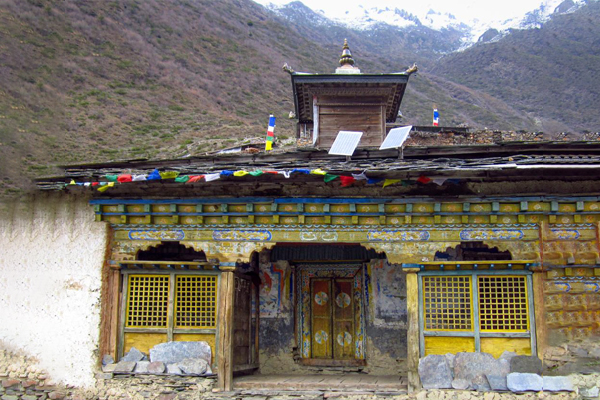
- Tsum Valley’s Mu Gompa (Gorkha District)
Mu Gompa is the largest and most remote hidden monastery in the Tsum Valley. It is located at an altitude of approximately 3,700 meters. The monastery is surrounded by the expansive seasonal yak pastures and the majestic backdrop of the Himalayas. The location is serene and spiritually rich.
Inside the gompa, there is a large statue of Avalokiteshvara, images of Tara and Guru Padmasambhava, and ancient religious scriptures like the Kangyur (the Tibetan Buddhist canon). The whole monastery is adorned with the prayer flags.
From the premises, you can see the views of the snowcapped peaks like Mount Manaslu, Buddha Himal, Himalchuli, Hiunchuli, Sringi Himal, and more.
Nearby, you can find popular locations like Milarepa's Cave (Piren Phu), Dhephyudonma Gompa, Rachen Gompa, other Buddhist monasteries in Nepal, and several Tsum Valley villages.
To reach there, you must undertake the multi-day Manaslu Circuit with a Tsum Valley trek through the Tsum Valley. To reach the starting point of the trek, you can drive from Kathmandu. Then, you can start the multi-day trek.
- Thubten Choling Monastery (Solukhumbu)
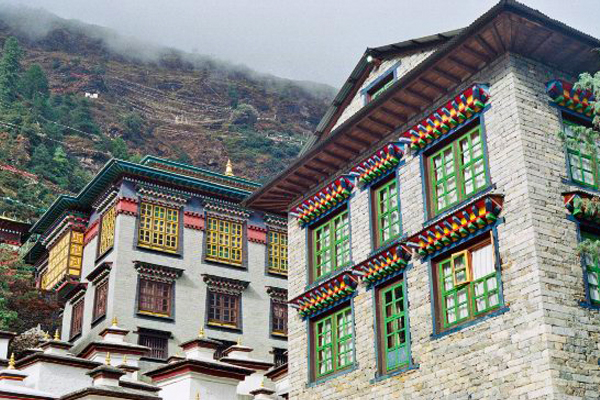
Thubten Chöling Monastery is a monastery located in the Solukhumbu district of Nepal. It is one of those Buddhist monasteries in Nepal that the Everest trekkers may know but the Annapurna trekkers may not. So, it's kind of hidden for the Annapurna trekkers and is rarely visited by Everest trekkers too.
The monastery is a multistory structure. The walls and floors are adorned with intricate paintings, and statues of saints and lamas are featured throughout the complex.
The Thubten Choling monastery offers beautiful scenery, including the views of Mount Everest, Makalu, Cho Oyu, Ganesh Himal, Dorje Lakpa, Langtang Lirung, and so on. Also, the journey to the monastery is scenic itself, offering views of the deep valleys, the Junbesi stream, evergreen forests, and much more.
The nearby attractions of the Thubten Chöling Monastery include Junbesi Monastery, traditional Sherpa villages, and kiwi and mandarin orchards. The Pikey Peak trekking trail and Everest Base Camp trail are also attractions.
The Thubten Chöling Monastery is accessible from Kathmandu; you can take a flight from Kathmandu to Phaplu and then drive to the Jhunbesi village. From the Jhunbesi, you can hike to the monastery; the flight takes around 45 minutes, the drive takes around 1.5 hours, and the hike takes 1 hour.
Or, you can also take a bus or jeep from Kathmandu. It takes around 12 hours to reach Phaplu. Then, you can continue the drive to Jhunbesi. From Jhunbesi, you have to hike to the monastery. The drive to Jhunbesi takes around 1.5 hours, and it takes about an hour to hike to the monastery.
- Luri Gompa (Upper Mustang)
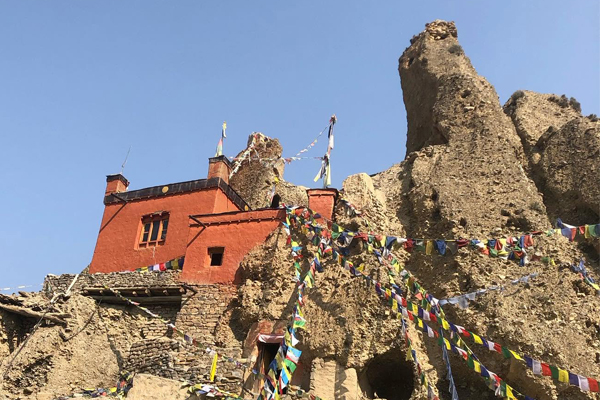
Luri Gompa is one of the less popular spiritual places in Nepal that most foreigners and even some Nepalis don’t know about. It is a historic cave monastery in the upper Mustang, located at an altitude of around 4,000 meters. The locals call it a hidden gem of the ancient kingdom of Lo.
This monastery is known for its intricate 14th-century murals and its unique location carved into a steep sandstone cliff. It is built into the series of the interconnected caves with natural sandstone pillars supporting the structure.
The visitors can see the two main chambers, with an inner chamber featuring the large, revered chorten (stupa) crowned by a canopy. The walls and ceilings of both chambers are decorated with well-preserved 14th-century murals.
From the Luri Gompa, you can see the peaks like Mount Dhaulagiri, Annapurna I, Tukuche Peak, Nilgiri, Tilicho Peak, Yakawa Kang, Khatungkang, Thorong Peak, and so on.
The Nyingma-Kargyupa sect of Tibetan Buddhism followers visit this monastery for their daily sessions, like meditations, chanting, and other chores. The nuns and monks also visit there. The gompa is managed by the residents of the nearby Yara village.
The nearby attractions of the Luri Gompa include Lo Gekar (Ghar Gompa), Tsarang Village, Chungsi Cave Monastery, Yara Gaon and Ghara Gaon, and so on.
To reach the Luri Gompa, you can book the Upper Mustang trek. From Pokhara, you have to fly to Jomsom, where the trekking journey starts. Or you can go for the jeep tours to the upper Mustang and visit the Luri Gompa.
- Rachen Nunnery (Tsum Valley)
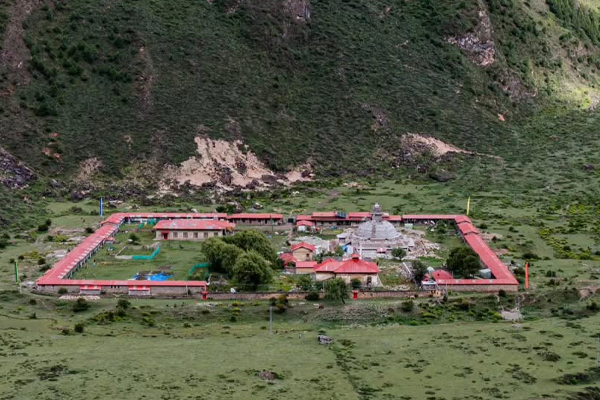
Rachen Nunnery is an important Buddhist monastery in the upper Tsum Valley of Nepal. The trekkers who trek to the Tsum Valley may know it, but it is not a global destination. This monastery serves as an important center for the female monastic life in the Himalayas.
This nunnery is located in the Shiar Khola Valley near the village of Chhokangparo at an altitude of approximately 3,240 meters.
The renovated complex features the precious religious statues and ancient Buddhist texts. The other components include a new, spacious prayer hall (Gompa), residential quarters, educational facilities, communal areas, the World Peace Stupa (under construction), and so on.
From the nunnery, the sceneries include Ganesh Himal, Siringi Himal, Boudhan Himal, lush hills, the Syar River, alpine forests, wildlife, and many more. It is one of the best spiritual places in Nepal that has the best scenery too.
Nearby, you can see the Mu Gompa, Dephyudonma Gompa, Gumba Lungdang, Milarepa's Cave (Piren Phu), Chhokangparo village, and more.
The Ranchen Nunnery is easily reachable. You can get there via a drive from Kathmandu to the village of Machha Khola. Then, the trail takes you through the remote regions. You have to trek from the Machchha Khola through the Tsum Valley.
- Namobuddha Monastery (Kavre District)
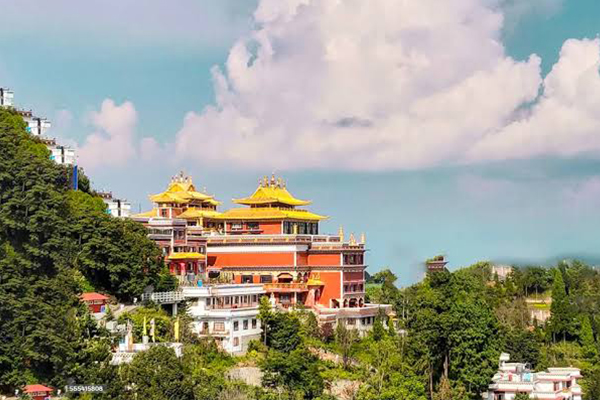
Namobuddha Monastery, also known as the Thrangu Tashi Yangtse Monastery, is a Buddhist monastery located on the hilltop in the Kavrepalanchowk district. It is believed that the Buddha sacrificed his body to a starving tigress and her cubs in his previous life.
The monastery complex features the monastic college, a school, and the Dewachen temple. The stupa is said to be the home to the bone relics of the past life body of Gautama Buddha.
From the Namobuddha Monastery, you can see the views of the snowcapped peaks like Langtang, Gaurishankar, and even Mount Everest and the surrounding hills. The atmosphere of the stupa is serene, and it is surrounded by the hills.
The nearby attractions of the Namobuddha monastery include Thrangu Tashi Yangtse Monastery and the Dewachen Temple.
To reach there, you can drive to Namobuddha from Kathmandu via car or taxi. It is an easy way and takes around 3-4 hours to reach. The other options include taking the bus from Kathmandu to Banepa. And then take a bus from Banepa to Namobuddha.
Or, you can hike from the town of Dhulikhel. It takes around 3-5 hours to reach the monastery. You can hike from Panauti too.
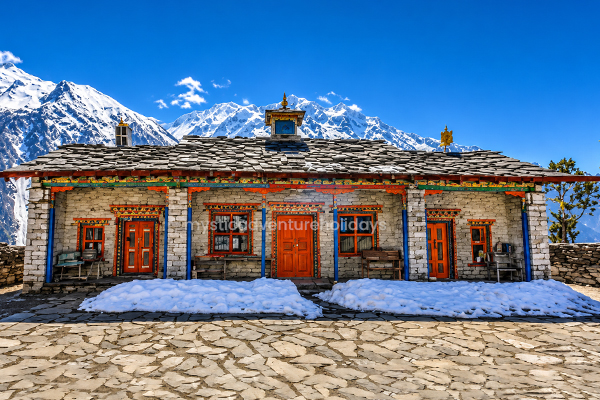
- Lungden Gompa (Tsum Valley)
Lungden Gompa is one of the underrated hidden monasteries of Nepal, perched on the ridge above the Lungdang Khola river at an altitude level of 3,200 m. It is also an isolated monastery surrounded by the rhododendron and pine forests in Tsum Valley.
This Buddhist monastery in Nepal features the prayer hall with flickering butter lamps, thankas (Tibetan Buddhist art), and sculptures. The monastery practices the Nyingma tradition of the Buddhist traditions. Like other monasteries, you can see the prayer flags around this one too.
From the Lungden Gompa premises, you can see the views of the peaks like Ganesh Himal I, Ganesh Himal II, and Ganesh Himal IV.
There are several popular places near the Lungden Gompa, including Ganesh Himal Base Camp, Mu Gompa, Rachen Gompa, Dephyudonma Gompa, Chhokangparo village, Dumje settlement, and so on.
You can reach the Lungden Gompa by the same way as the Mu Gompa through the Manaslu Circuit with the Tsum Valley trekking trail starting from Kathmandu.
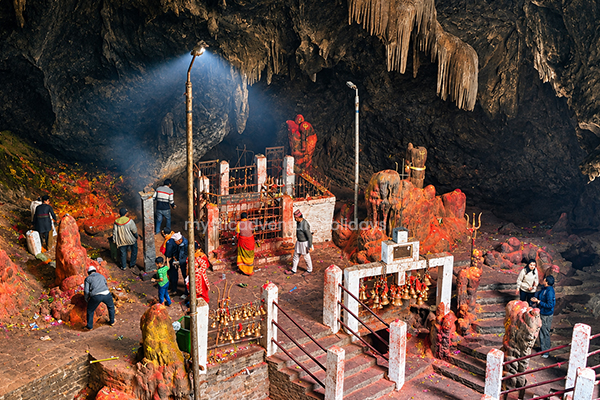
- Maratika Cave Monastery (Khotang District)
Maratika Cave Monastery is a less explored monastery, although the Halesi temple is popular. It is situated between the sacred rivers Dudh Koshi and Sun Koshi.
The cave complex features natural geological formations like stalactites and stalagmites. There are other caves also, like Basaha cave (featuring an image of Nandi) and the Bhairava cave inside the complex.
From the Maratika Cave Monastery premises, you can see the rolling and lush green hills, deep river valleys, terraced fields and traditional villages, panoramic mountain vistas, natural rock formations, a natural skylight, and so on.
Besides the scenery, in the nearby places, you can see Tuwachung Hill, Naga Cave (Nagthan), and Bungalung Rock Garden. If you plan to go further, there are other places like Diktel Bazaar, Temke Danda, Sewa Khola, and Dudh Koshi Rivers.
You can take the jeep drive to the Maratika Cave from Kathmandu, crossing the Dhulikhel, Okhaldhunga, and other rural areas. It takes around 7-8 hours to reach there. If you are looking for the cheaper option, then you can try the flight option from Kathmandu to Janakpur and then take a taxi to the caves.
Some companies also offer helicopter tours directly to the Maratika (Halesi) cave monastery. It is much safer and the fastest option.
Why These Monasteries Remain Hidden Even in the Modern Era?
Even in the modern era, these monasteries remain hidden. The remoteness may be the reason. In some cases, the government restricts the preservation of the monastery for other reasons. Below are some reasons.
Many of Nepal's remote monasteries are located in the high and mountainous regions. The terrain around the monasteries is rugged and steep and has challenging weather conditions. For example, the monasteries are located near the Tibetan border, like Tsum Valley.
The trails to the monasteries are also difficult, with treacherous, undeveloped ones. The navigation through these trails is difficult and often goes through high mountain passes and unstable terrain. Also, the infrastructures like roads, teahouses, and air transport are missing.
- Restricted travel regulations
The government has designated several remote areas like Upper Dolpo, Tsum Valley, and Upper Mustang as restricted areas. So, accessing these areas requires a special permit, which is costly and difficult to obtain.
Tourists are also not allowed to trek solo in these restricted areas. Instead, they must obtain the permit and make arrangements through the registered trekking agency and travel with the licensed guide.
The restrictions are mainly to preserve the local ecosystem. While in places like the Tum Valley, the restriction is due to the border concern, as it is near China (Tibet).
- Cultural and religious preservations
Sometimes, the local people don’t allow the commercialization of monasteries or the visiting of the tourists in monasteries surrounding them. It is done to preserve the ancient traditions. The communities have a vested interest in protecting this heritage and spiritual practice.
In some monasteries, the locals and spiritual leaders actively manage the level of visitors' access to ensure the rituals and heritage are not disturbed.
Also, the monasteries are made in the remote places by the monks and nuns to create a place for deep contemplation and free from the worldly distractions.
Travel tips for visiting sacred sites
- Book your trip to the restricted areas through a government-registered Nepali trekking agency.
- Choose your desired destination and plan the itinerary accordingly.
- Choose the best season to go for the trip, like spring and autumn.
- Dress modestly while entering the monasteries.
- Wear layered clothes to face the challenging weather conditions.
- Pack all the essentials, the kit, water bottles, and all items like clothes, cash, and so on.
- Respect the local culture and tradition.
- Ask permission for the photographs of the person, monk, nuns, or inside monasteries.
- Remove your shoes and hats before entering the monasteries and shrines.
The Deeper Lesson
The idea of the name "hidden" given to these monasteries does not always mean remote. Sometimes, it means inner discovery, spirituality, or simplicity too. The quiet place away from the city life allows deep introspection and a renewed sense of self.
In those hidden areas, centuries-old Buddhist and Bon traditions are the daily reality for the monks and nuns. They live there doing meditation sessions, changing, and doing daily chores. The travelers who observe these living traditions and routines can foster deeper connections to faith and heritage.
The hidden monasteries are the place travelers must go if they want serenity and self-discovery. The mandated silence of a retreat has the capacity to calm the mind, improve intuition, and help an individual reconnect with their inner self.
The scarceness of luxury teaches a strong sense of belonging, showing that deep, intentional connections with others are far more nourishing than the fleeting interactions of the digital world. The simpler life of the monks and nuns demonstrates that one can be content with life’s basic necessities.
It is an underrated fact that true Nepal begins where the concrete road ends.