Origin of the Teej Festival
Teej has been prevalent since Satya Yuga. When Parbati, the princess of the Himalayas, started fasting to get Lord Shiva as a bridegroom, the tradition of the Teej festival flourished among Hindu women. The story of Teej began when the king of the Himalayas decided to marry his beautiful daughter, Parvati, to the wealthy lord Vishnu. She escaped from her house in the middle of the night.
Then she started living in the forest, led a monastic life, and started manifesting Lord Shiva. When Lord Shiva knew about her, he tested her loyalty towards him, and he appeared in front of Parvati as Lord Vishnu. Then, he entices Parvati to marry him, but she doesn't change her decision, and finally, Lord Shiva reveals his real identity.
Then they got married and started living with each other happily. She expressed her happiness by holding a party for their friends, and that is how Haritalika Teej originated. As of now, every Shiva temple and shrine has a special crowd of pilgrims on the occasion of Haritalika Teej.
Importance of Teej in Nepal 2026
The rich Nepalese cultural heritage and tradition are showcased via festivals, and one of them is Haritalika Teej. The main highlight of the festival is the strength and devotion of women, unity, sisterhood, and perseverance of cultural and folk songs, dances, and attire.
- Glorification of Woman kind
The festival represents a sign of women's empowerment and sisterhood among women. They promote colorful traditional sarees and dhotis. Western dress has taken over traditional Nepalese attire, and it fosters a sense of Nepalihood among them. They perform dances in the folk songs while honoring their strength, beauty, and contribution to their society.
Parvati did everything to win the heart of Lord Shiva for many years. She lived a monastic life for many years in the forest. After spending many years wishing for Lord Shiva as her husband, Parvati finally won the heart of Lord Shiva. This day is celebrated for their union and also symbolizes the perfect marital bond among the married ones.
- Religious and Cultural Importance
According to Hindu mythology, Teej is taken as an auspicious time for wishing for the well-being of the husband, a strong marital bond, and longevity. During this time, married and unmarried women decorate themselves in a local dress with hand-carved henna mehendi. They engage themselves in a day-long fast and spend the day dancing to a folklore song.
Married women do a strict fast even without drinking water; it is also known as “Nirjala Vrat.” They refrain from water and food for 24 hours. The fasting is done to receive blessings from Lord Shiva and Parvati for the well-being of their husband and a strong marital bond.
Teej helps in making a strong bond between in-laws, mothers, sisters, and husbands. It promotes a sense of unity and love among family members, and it creates a friendly bond between community members.
Women prepare many delectable feasts along with sweet treats. The first day of Teej is known as “Dar Khane Din,” where they consume many self-prepared dishes.
How is Teej Celebrated in Nepal in 2026?
In Nepal, Teej is celebrated for three days. It consists of Dar Khane Din, a fasting day, and bathing in a holy river. They pray to Lord Shiva for blessings and present traditional performances while wishing for the longevity of their marital life.
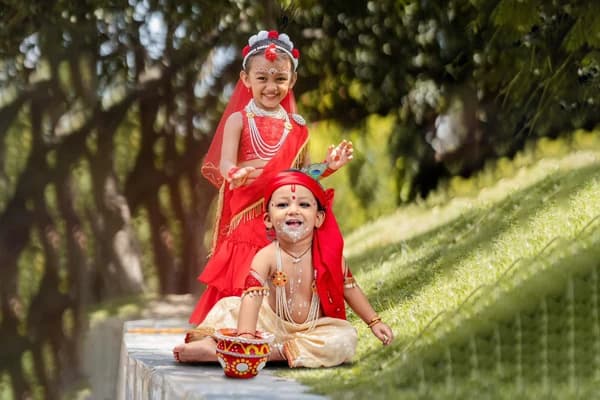
Teej begins with a feast day, which is popularly known as “Dar Khane Din.” During this day, married women dolled up in a red saree along with makeup and jewelry. It is also known as “Sorha-Sringaar.”
During the day, women gather together and dance to a traditional Teej song. They prepare a variety of foods and desserts. The women spend the day for themselves; they do whatever they want and spend the day with their friends.
Married women went to their parents' home for the grand feast. They express their pains via songs, and it is also an occasion to raise their voice on social issues and discrimination against women. The feast and celebration go on till midnight with their loved ones.
The second day of the festival is called Fasting Day. Married and unmarried women wake up early and take a warm bath. They decorate themself in gold jewelry while wearing red sarees.

After that, they go to Shiva temples and offer flowers and fruits to Lord Shiva. They avoid eating anything throughout the day, and this fasting is known as “Nirjala Vrat.” They worship Lord Shiva for the long life of their marital life as well as the well-being of their husbands. They end their fast in the late evening by drinking crystallized sugar water.
- Third Day: Rishi Panchami
The third day of Teej is known as Rishi Panchami. It is the most auspicious day of the festival, which begins by waking early and taking a holy bath in a nearby river. The married and unmarried women offer money, food, and pure offerings to the seven saints (Rishi).
They bathe in red mud, which is found on the roots of the holy “Datiwan Bush” with leaves. The menstruation period is considered impure, and it prevents women from entering or cooking, doing any religious acts, and touching male members and old members of the family. This bath is believed to wash away all their sins, knowingly or unknowingly, during the menstruating days, followed by worshipping Ganesh Bhagwan. They celebrate this day by eating bean soup, mutton soup, and other delicacies.
Teej Festival Celebrations in Pashupatinath 2026
Pashupatinath Temple is a popular temple dedicated to Lord Shiva. Married and unmarried women dress up in a red saree or kurta along with some jewelry. The theme color of the festival is red, which is mostly worn by married women and is believed to attract the attention of Lord Shiva.
People visit this sacred temple for the blessing of Lord Shiva. During this, all the women of Kathmandu Valley visit the temple to worship Lord Shiva and dance for a whole day on the occasion of Haritalika Teej.