
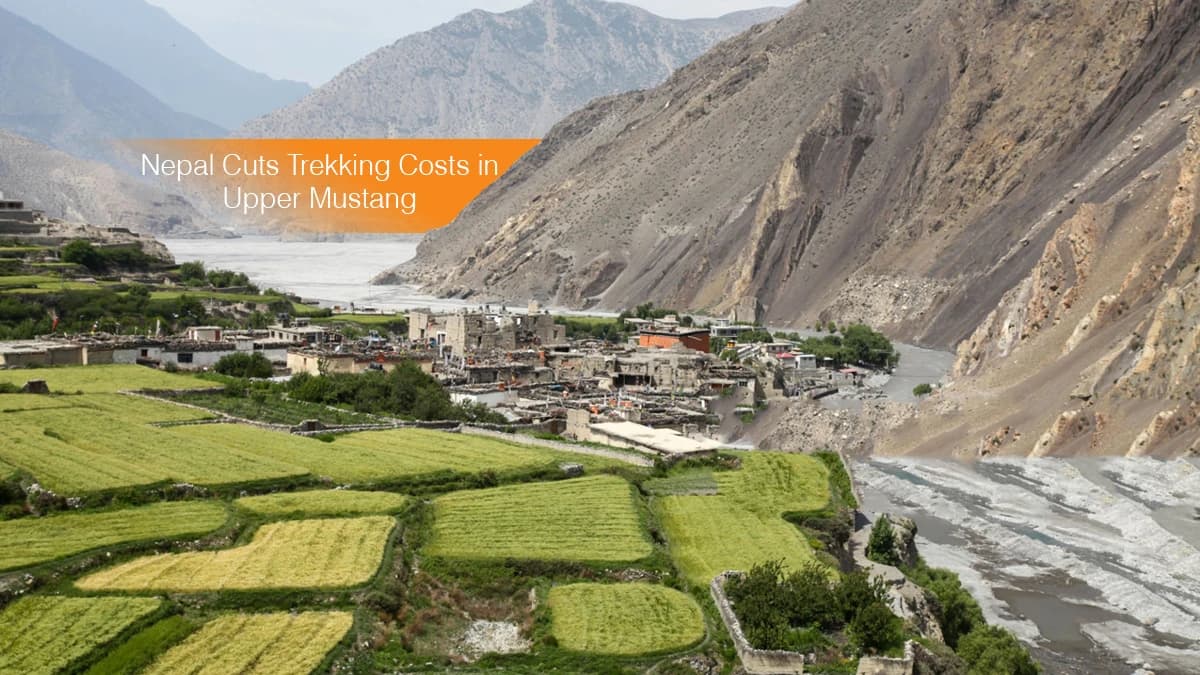
It is official. The Nepal government decides to replace the previous Upper Mustang entry fee of $500 minimum with a new permit cost system of $50 per day for the foreign visitors.
Nepal Cuts Trekking Costs in Upper Mustang With Daily Permit System
Original Policy Rationale
Every tourist is well aware of the fact that the Mustang region is a restricted area. It was closed to the outsiders in 1992 to preserve the villages, monasteries, and the unique cave dwellings. For this, the region has also got the name of the last forbidden kingdom.
To visit the restricted area, foreigners required a special, expensive permit. It also ensured that the tourism was controlled and also helped to protect the region’s unique heritage.
Why Such A Sudden Change?
The sudden change or the shift in policy is done to boost tourism. It is the primary goal. It was necessary because the previous fee of $500 was a major financial deterrent for the travelers with the limited time. The previous policy discouraged the budget-conscious travelers.
With the rise of jeep tours and improvement of the road infrastructure, the policy shift was necessary. The fixed 10-day minimum meant these travelers had to pay for the unutilized time.
Despite Mustang attracting around 150,000 foreign visitors annually, only 3-4 percent used to enter Upper Mustang due to the high permit cost.
Also, the rigid 10-day structure offered no flexibility for the travelers to tailor their trips according to their schedule or interest without a huge financial penalty. Because of this, the 1992 policy was viewed by many, including TAAN, as an outdated regulation.
What Changed And Remained The Same In The Permit System?
The primary change in the upper Mustang permit system is the shift from the mandatory flat fee for 10 days to a daily rate.
For example, the 5-day trek permit fees cost $20 now as compared to the $500 under the old policy. And if you are planning for the few-day tour, then the permit fees apply according to the day you are traveling.
This policy was approved by the cabinet through an amendment to immigration regulations. And it is official.
Despite the fee changes, some essential requirements for the Upper Mustang trekking remain in place. The trekkers still have to travel in a group with at least two people. A government-licensed Nepali guide is still mandatory.
The permits must be arranged through a registered trekking agency. And along with the restricted area permit, you will still need to obtain the Annapurna conservation area permit.
How The New Rule Might Reshape Travel Itineraries In Mustang?
The new rule is expected to highly reshape the travel itinerary in the Upper Mustang area. As the shorter trip cost less than the previous one, quick exploration of the region became a practical and budget-friendly option.
It is speculated that the attractions of the overland transport, such as jeeps and motorbikes, will be increased. As the permit cost is lowered, more jeep tours and bike tours will likely happen in the future.
The itineraries will focus more on the efficient, short road trips rather than the traditional and longer treks. The itineraries will be customized to match the individual time constraints and interests.
Reaction From The Local Community
The local leaders and community welcome the reform. They say it has partially addressed their demand to ease the restrictions and boost tourism.
This policy is expected to directly boost the income of local businesses like teahouses, lodges, guides, and jeep operators. So, all the locals who are directly and indirectly connected to the tourism business are happy and positive towards the policy.
How To Obtain The New Daily Permit?
You can obtain the new daily permit through the registered trekking agency in Nepal. The agency will handle all the necessary paperwork.
First, choose a registered trekking agency like Mystic Adventure Holidays. Submit all the required documents to your trekking agency, including the copy of your valid passport, a copy of your valid Nepali visa, two passport-sized photos, and a detailed trekking itinerary.
Then, pay the permit fees ($50 * the days of your Upper Mustang visit) to the agency. The agency will submit the application and documents on your behalf to the department of immigration in Kathmandu or Pokhara.
The processing will take time. Then, your guide will carry the permit during the trek, and you must show it at various checkpoints.
Expected Total Cost Depending On Days Spent
The total expected permit cost is calculated by multiplying the number of days you spend in the Upper Mustang region by the daily rate and then adding the fixed ACAP permit fee.
For example, the total permit cost is (number of days * $50) + $30.
Below are some estimates:
- 5-day trip: (5 days * $50/day) + $30 = $280 per person
- 7-day trip: (7 days * $50/day) + $30 = $380 per person
- 10-day trip: (10 days * $50/day) + $30 = $530 per person
- 12-day trip: (12 days * $50/day) + $30 = $630 per person
- 14-day trip: (14 days * $50/day) + $30 = $730 per person
AdventureBackpackerExploreExplore NepalHikingHimalayasInformationLiving TraditionsMountainsNatureNepalTrekTrekkingWanderlust
Need Help? Call Us on WhatsApp+977 9851323302orChat with us
Latest Travel Blogs

Sep 01, 2026By VIPUL
Shree Krishna Janmashtami 2026
Aug 26, 2026By VIPUL
Gai Jatra 2026
Aug 24, 2026By VIPUL
Janai Purnima 2026: A Sacred Thread Festival
Need Help? Call Us.+977 9851323302